


4 Major Growth Opportunities in Apparel Manufacturing for 2026 & Beyond

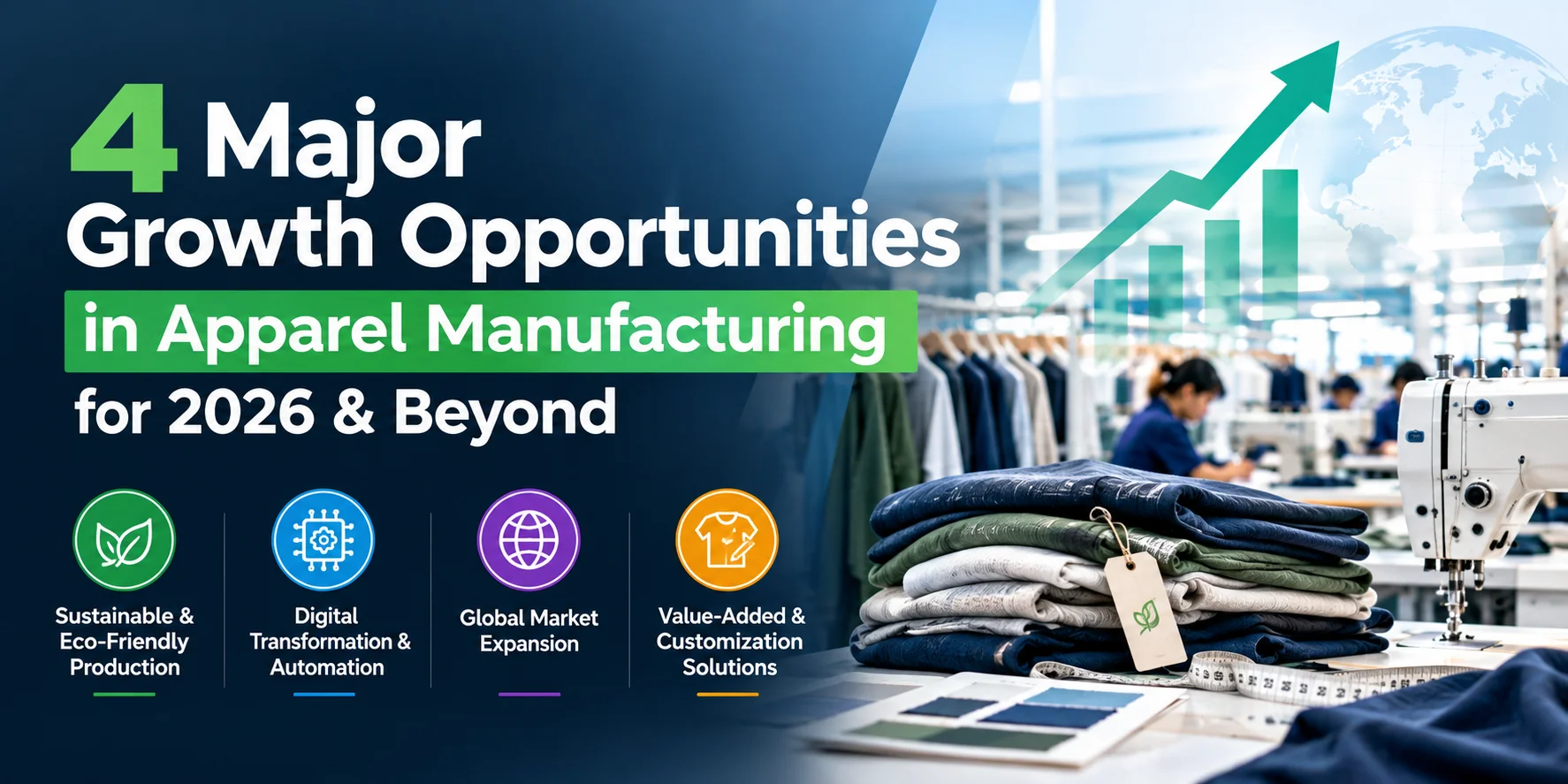
Let’s be honest for a second. If you’re running a fashion brand, sourcing team, or private label business anywhere in the USA, UK, or Europe, you’ve probably already felt something’s off with the way things used to work. The old playbook- huge bulk orders, months-long lead times, vague “we’ll sort out sustainability later” promises from your supplier- just isn’t cutting it anymore. It’s not that the apparel industry is shrinking. It’s that it’s changing shape, fast, and the brands paying attention right now are the ones about to pull ahead of everyone still doing things the 2019 way.
We put this guide together after noticing the same questions coming up again and again from brand owners we talk to at Warrcoin Industry people trying to figure out where the real Apparel Manufacturing Opportunities actually are, instead of chasing every buzzword LinkedIn throws at them. So here are the four shifts we think matter most, based on where the actual Garment Industry Trends are heading through 2026 and beyond, and what we’re doing differently because of them.
Why 2026 Feels Different
There’s a lot of noise out there about “disruption” in apparel, and honestly, a chunk of it is overblown. But underneath the noise, something real is happening. Tariffs keep shifting under everyone’s feet. Brands are tired of betting their entire supply chain on one country or one factory. Regulators in the EU are turning “sustainability” from a marketing slogan into an actual legal requirement. And the way people buy both consumers and B2B buyers has quietly changed too.
Quick snapshot, if you want it in plain terms: manufacturing is spreading out across more countries instead of concentrating in one place, orders are getting smaller and more frequent instead of one giant annual run, sustainability is becoming something you have to prove rather than just claim, and certain categories , sportswear especially, are growing faster than the rest of the market combined. None of this is a passing trend. It’s structural. Which means the brands that adjust now have a real head start over the ones who wait until their competitors have already locked it in.
Let’s go through each one properly.
Opportunity #1: Sustainable Clothing Manufacturing
A few years ago, “sustainable” on a hang tag was mostly a nice-to-have, something you could add if the budget allowed. That’s not really true anymore. Sustainable clothing manufacturing has quietly turned into table stakes, not a differentiator, especially if you’re selling into Europe.
Here’s what that actually looks like on the ground:
- Recycled and low-impact fabrics- think recycled polyester, organic cotton, TENCEL Lyocell- are showing up in mainstream requests, not just the “eco” capsule collection nobody buys.
- Buyers are asking pointed questions about certifications now. GOTS, OEKO-TEX, that sort of thing. Vague “we care about the planet” copy doesn’t cut it in a sourcing meeting anymore.
- Traceability has become a genuine selling point. Customers want to know where the garment was actually made, and brands that can answer that honestly tend to convert better than the ones dodging the question.
- Deadstock fabric and low-waste production are getting real traction too, partly for the planet, partly because it’s just cheaper.
Honestly, the opportunity here isn’t only about doing the right thing (though that matters). It’s commercial. Get ahead of this now, and you’re not scrambling later when it becomes mandatory, which, in the EU at least, is basically already happening.
Opportunity #2: Rethinking the Fast Fashion Supply Chain
The classic fast fashion supply chain– massive bulk orders, one factory, one country, long lead times, hope for the best- is under real strain right now. Tariff volatility alone has made a lot of brands nervous about putting all their eggs in one basket, and customers, frankly, are getting a bit more skeptical of the whole “endless cheap clothes” model too.
That doesn’t mean fast fashion disappears overnight. It means the machinery behind it has to evolve, and fast:
- Diversifying across multiple sourcing regions instead of relying on one country, so a single tariff change or shipping delay doesn’t sink an entire season.
- Nearshoring and regional sourcing picking up steam, sometimes a slightly higher unit cost is worth it if it means weeks instead of months of lead time.
- On-demand and small-batch production becoming genuinely viable, letting brands test a design with a small run before betting big on it.
- AI-assisted demand forecasting helping brands avoid the classic overproduction trap that’s plagued fast fashion for years.
For growing brands, this is actually good news, not bad. It means a manufacturer who can offer flexibility, lower minimums, quicker samples, and multi-region shipping starts to matter more than one that only competes on rock-bottom pricing. That’s exactly the gap we built our own process around at Warrcoin Industry.
Opportunity #3: Rising Custom Sportswear Demand
If there’s one category that just keeps climbing, it’s this one. Custom sportswear demand has spread way beyond gyms and sports uniform clubs; it’s everyday fashion now, driven by the athleisure trend that refuses to slow down and a wave of independent fitness and streetwear founders launching direct-to-consumer brands from their laptops.
A few things fueling it:
- Private label fitness brands are popping up constantly on social media, with founders going from idea to inventory faster than a traditional retail cycle would ever allow.
- Team and club orders are a quiet, dependable revenue stream; schools, academies, and corporate teams tend to reorder branded kits on a predictable seasonal cycle, year after year.
- Performance fabric technology has actually gotten good: moisture-wicking blends, compression knits, real four-way stretch, so sportswear is technically differentiated now, not just a logo slapped on a t-shirt.
- Full-color, all-over sublimation printing is affordable at smaller order volumes than it used to be, which opens the category up to brands that couldn’t justify it a few years back.
Brands moving into sportswear now are catching this wave while it’s still climbing, rather than fighting for scraps in an already-crowded space. If your brand hasn’t looked seriously at a performance or team-wear line yet, this is probably one of the clearest Apparel Manufacturing Opportunities sitting in front of you right now.
Opportunity #4: The Rise of E-commerce Apparel B2B
Remember when wholesale sourcing meant trade shows, sample catalogs mailed halfway across the world, and months of back-and-forth before a single unit shipped? That model’s fading fast, replaced by e-commerce apparel B2B platforms and direct manufacturer relationships handled almost entirely online.
What’s actually driving this shift:
- Direct-to-manufacturer sourcing is cutting out the layers of trading companies and agents that used to sit between a brand and the factory floor, which means factory-direct pricing is now reachable for brands that don’t need massive order volumes.
- Digital sampling and video consultations let you approve designs and fabrics remotely, no more waiting weeks for a physical sample to clear customs just to say “yes, this works.”
- B2B marketplaces and manufacturer websites now function more like a storefront: clear pricing, published minimum order quantities, instant quote requests, instead of opaque back-room negotiations.
- Smaller, more frequent orders are becoming the norm as brands lean on e-commerce apparel B2B tools to test a product before committing to bulk, rather than guessing months ahead.
For newer and growing brands especially, this levels the playing field in a real way. You don’t need an established import relationship or a six-figure opening order anymore; you need a manufacturer with a transparent, digital-first way of doing things.
How These Four Trends Actually Connect
Here’s the part people miss: these aren’t four separate, unrelated things happening at the same time by coincidence. They’re pulling in the same direction. The brands winning through 2026 are combining sustainable sourcing, a more flexible supply chain, category growth (sportswear being the obvious one), and digital-first B2B sourcing into one connected strategy, not treating each as its own isolated box to tick.
A manufacturer that only nails one of these, say, cheap pricing but zero sustainability credentials, or fast shipping but rigid bulk-only minimums, leaves you exposed exactly where the market is heading. The Garment Industry Trends shaping 2026 reward manufacturers and brands who adapt across all four fronts at once, not just the easiest one.
A Few Honest Questions Worth Asking Yourself
If you’re evaluating your current sourcing setup, here’s what we’d genuinely ask if we were in your shoes:
- Can your current manufacturer actually prove their sustainability claims, or are you leaning on generic marketing language with nothing behind it?
- Is your supply chain sitting entirely on one country or one factory, leaving you exposed the moment a tariff or shipping disruption hits?
- Are you actually capturing growth in categories like sportswear and performance wear, or is that revenue just sitting on the table for a competitor to grab?
- Can you source, sample, and order mostly online, or are you still stuck in slow, back-and-forth negotiation cycles from a decade ago?
If you answered “no” to any of these, don’t panic; that’s not a failure on your part. It’s just an opportunity that hasn’t been picked up yet.
Where Warrcoin Industry Fits Into All This
We didn’t build our process around outdated assumptions about how apparel sourcing “used to” work. As demand keeps shifting, here’s how we’ve tried to stay lined up with where things are actually going:
- Transparent, certified fabric sourcing for brands that genuinely care about sustainable clothing manufacturing, not just saying they do
- Realistic, flexible minimum order quantities, so you’re not forced into fast-fashion-style bulk commitments before you’ve even tested a design
- A dedicated custom sportswear and activewear production line, built specifically for the fastest-growing category in apparel right now
- A fully digital sourcing process, from quote to mockup to sample approval, so working with us actually feels like modern e-commerce apparel B2B sourcing instead of a decade-old trading relationship
Whatever growth opportunity you’re chasing- sustainability, sportswear, a more resilient supply chain, or simply faster sourcing- our team at Warrcoin Industry is set up to support it directly, not just talk about it.
Frequently Asked Questions
What are the biggest apparel manufacturing opportunities right now?
The strongest current opportunities include sustainable clothing manufacturing, diversifying supply chains away from single-country sourcing, rising demand for custom sportswear and activewear, and the shift toward digital, direct-to-manufacturer e-commerce apparel B2B sourcing.
What are the current garment industry trends brands should watch?
Key garment industry trends include AI-assisted demand forecasting, nearshoring and regional sourcing to reduce tariff exposure, growing regulatory pressure around sustainability and traceability, and smaller, more frequent order cycles replacing traditional bulk-only production runs.
Is sustainable clothing manufacturing actually growing, or is it just marketing?
It’s genuinely growing, not just a marketing angle. Regulatory frameworks, particularly in the EU, are pushing traceability and low-impact production from optional to increasingly mandatory, and consumer demand for verifiable sustainability keeps rising rather than fading like a passing trend.
How is the fast fashion supply chain changing in 2026?
The fast fashion supply chain is shifting away from single-source, ultra-bulk production toward more diversified sourcing across multiple regions, smaller batch sizes, and AI-assisted forecasting designed to cut down on the overproduction that’s long plagued the model.
Why is custom sportswear demand increasing so quickly?
Custom sportswear demand is being driven by the ongoing athleisure trend, a wave of new private label fitness brands launching direct-to-consumer, and steady, recurring orders from schools, clubs, and sports academies that need branded team wear year after year.
What does e-commerce apparel B2B actually mean for a small brand?
It means smaller, growing brands can now source directly from manufacturers online,requesting quotes, approving digital samples, placing orders, without needing the established trade relationships or huge opening orders that factory-direct pricing used to require.
Related Searches Buyers Also Ask About
- Wholesale apparel manufacturing opportunities USA: factory-direct sourcing is steadily replacing the multi-layered trading company setups of the past
- Best apparel manufacturing opportunities USA: usually judged on sustainability credentials, MOQ flexibility, and how transparent the sourcing process actually is
- Apparel manufacturing companies in USA: frequently paired with overseas manufacturing partners for cost-effective production at real scale
- Best clothing manufacturer in USA: increasingly evaluated on ethical sourcing and traceability, not just who can offer the lowest price
- Wholesale apparel manufacturing opportunities UK: UK brands are following the same nearshoring and diversification patterns already showing up in the US market
- UK clothing manufacturers for startups: flexible MOQs and digital sampling have become standard expectations, not bonus features anymore
- Clothing manufacturers Europe: under growing pressure from EU sustainability regulation and the upcoming Digital Product Passport requirement
- Usa custom clothing manufacturing: custom and private label production keeps outpacing generic bulk apparel orders
Final Thoughts:
The apparel industry isn’t slowing down; it’s just redistributing where the real growth is happening. Brands clinging to old sourcing habits are going to keep feeling squeezed by tariffs, rising costs, and shifting expectations. Brands that lean into these four Apparel Manufacturing Opportunities– sustainability, supply chain flexibility, sportswear demand, and digital B2B sourcing- are the ones quietly building real, durable growth heading into 2026 and beyond.
👉 Talk to Warrcoin Industry about building a sourcing strategy that’s actually aligned with where the Garment Industry Trends are heading, not where they used to be.