


FIFA World Cup 2026: Apparel Opportunities for Custom Soccer Kit Manufacturers

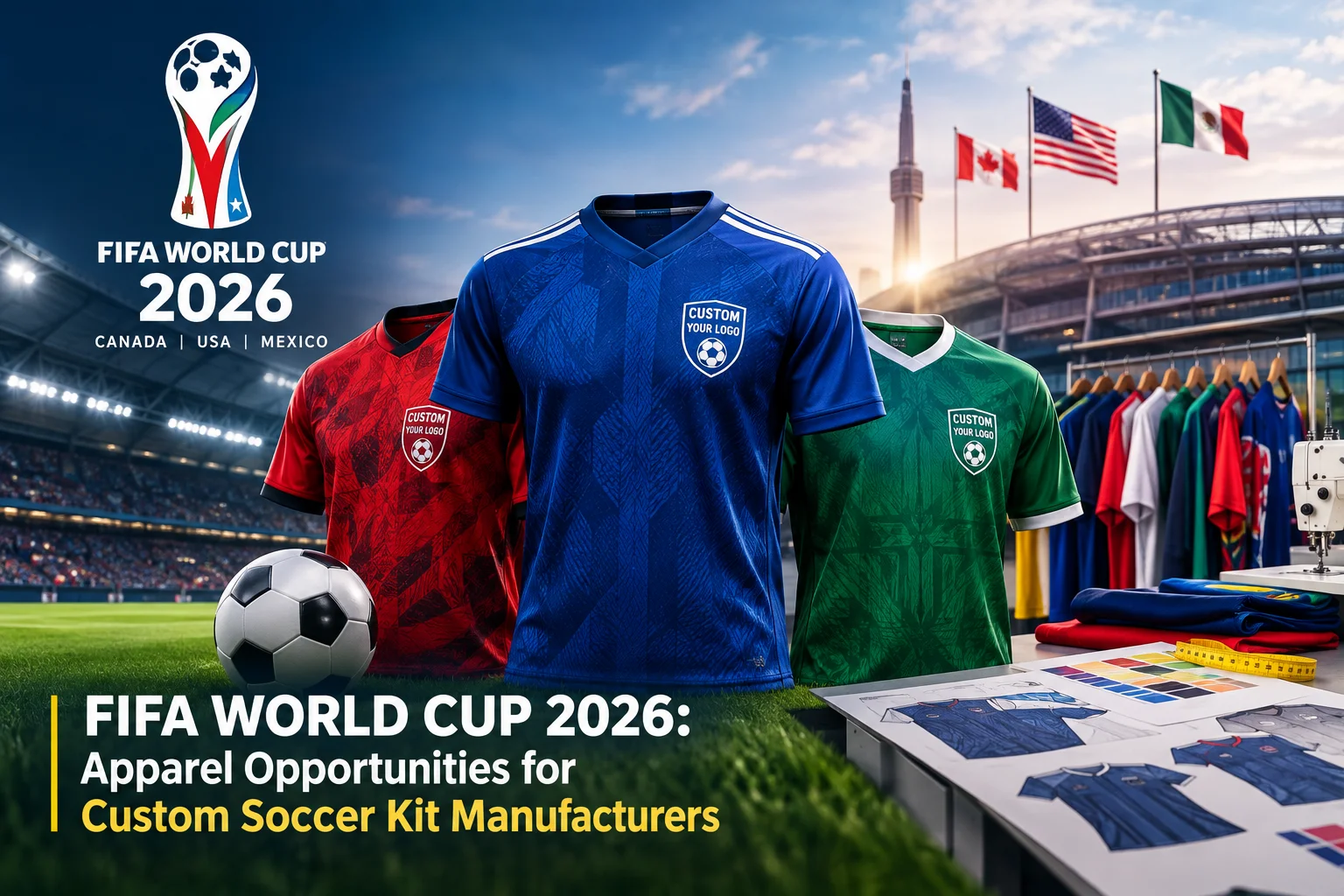
Spain lifted the World Cup trophy on July 19 at MetLife Stadium after that brutal, nervy 1-0 win over Argentina, and for a few weeks afterward it genuinely felt like the whole of North America had caught soccer fever at once. Bars in Ohio were packed for group-stage matches at nine in the morning. Youth clubs in Texas saw sign-up numbers jump. Sporting goods stores in Toronto and Mexico City sold through their jersey stock faster than they could restock it. And now that the confetti’s been swept up and the trophy’s back at FIFA headquarters, a different question is sitting in front of every soccer apparel business: what happens to all that demand now?
Here’s the honest answer — it doesn’t just disappear. If anything, the FIFA World Cup 2026 apparel surge was the opening act, not the whole show. Youth leagues that saw a spike in registrations this fall need uniforms. Adult rec leagues that formed on the back of tournament excitement need kits. Schools running new soccer programs need training gear. And every single one of them is now looking for someone who can actually make it — not just sell a licensed jersey off a shelf.
That’s the gap this article is about. The big retail names, FIFA’s own store, adidas, JD Sports — did exactly what you’d expect during the tournament: they sold replica jerseys and fan merchandise at scale. But replica fan gear and actual team-level custom kits are two very different businesses, and the second one is where the real, ongoing opportunity sits for a custom soccer uniform manufacturer.
The World Cup Effect Didn’t End When the Final Whistle Blew
Tournaments like this tend to leave a longer shadow than people expect. The 1994 World Cup, also hosted in the US, is still credited with kickstarting Major League Soccer a full two years later. The 2026 edition, spread across 16 host cities in the US, Canada, and Mexico, with a record 48 teams, reached an even bigger domestic audience than that one ever did.
What that means practically: youth and amateur soccer isn’t a niche interest anymore in a lot of these markets. It’s a growth category. Parks and rec departments are fielding requests for new leagues. Corporate wellness programs are adding five-a-side tournaments. College intramural soccer participation is up. Every one of those groups eventually needs the same thing: jerseys, shorts, training kits, goalkeeper gear, warmups, and most of them have no idea how to source it beyond typing “custom soccer jerseys” into Google and hoping for the best.
Where the FIFA Store and adidas Fit In (and Where They Don’t)
It’s worth being clear-eyed about this instead of pretending the big players don’t exist. FIFA’s official store and adidas’ World Cup 2026 collection cover the fan-facing side of things extremely well: national team replica shirts, commemorative tees, scarves, the stuff people buy to wear to a bar or a watch party. JD Sports’ World Cup hub does something similar for the UK market, bundling licensed apparel with sneaker drops and streetwear crossovers.
None of that touches team-level manufacturing, though. A licensed replica jersey isn’t something a rec league, a school, or a five-a-side corporate team can put their own sponsor logo, roster numbers, or club crest on. Those groups need a manufacturer who builds kits from scratch to their exact specs, which is a completely different supply chain than “print jerseys and sell them at retail.” That’s precisely the lane a dedicated custom soccer kit manufacturer operates in, and it’s a lane that gets busier, not quieter, once a tournament like this wakes a whole country up to the sport.
Sublimated Soccer Jerseys: Why This Is the Detail Teams Actually Notice
If you’ve watched even a few World Cup matches this year, you’ve seen how far kit design has come: gradient patterns, bold sponsor placement, national motifs woven right into the fabric pattern instead of just printed on top. That look comes from sublimation, a dye process where the design gets embedded into the fibers themselves rather than sitting as a layer on the surface.
Sublimated soccer jerseys hold their color and pattern far longer than screen-printed alternatives; they don’t crack or peel after repeated washing, and they let a team run a genuinely custom design, not just a template with a logo dropped on top. For a manufacturer trying to win business from clubs who just watched their favorite national team play in kits like that, offering real sublimation printing capability isn’t optional anymore. It’s become the baseline expectation.
Performance Football Wear: The Fabric Conversation Nobody Skips Anymore
Ask any coach who’s been running a program for more than a year or two, and they’ll tell you players notice fabric quality faster than parents notice the price tag. Moisture-wicking material, four-way stretch, breathable mesh paneling in the right places- these aren’t premium add-ons anymore; they’re what every serious buyer expects as standard.
Our performance football wear is built exactly around that expectation: fabric that actually performs, staying dry through 90 minutes, holding its shape through a full season of washing, moving with the body instead of against it is what separates a manufacturer that gets repeat orders from one that gets a single trial run and never hears back. Post-World Cup, with a wave of new and returning players paying closer attention to what elite teams wear on the pitch, expectations around fabric performance have quietly gone up across the board.
Teamwear Suppliers USA: A Market That’s Actually Underserved
Here’s something that surprises a lot of people: for as big as soccer has gotten in the US, the supply side hasn’t caught up. Plenty of teamwear suppliers USA-based clubs currently use are really just reselling generic overseas stock with a logo slapped on, long lead times, limited customization, and no real design support.
That gap is exactly where a manufacturer who understands both the American buyer (leagues, schools, club directors who want quick turnaround and responsive communication) and international production standards can carve out real, durable market share. Youth soccer alone in the US involves millions of registered players across thousands of clubs, and after this tournament, a meaningful number of new clubs and leagues are forming that don’t have an established supplier relationship yet. That’s an open door, not a crowded one.
Custom Goalkeeper Gear: The Niche Almost Nobody Does Well
Goalkeepers get treated like an afterthought by a lot of manufacturers, and it shows. With padded palms, reinforced elbows, different cut requirements, and jersey designs that need to stand out from the rest of the team on the pitch, goalkeeper gear isn’t just a field jersey with a different color.
A manufacturer that actually specializes in custom goalkeeper gear, rather than treating it as an odd add-on to a standard order, tends to win outsized loyalty from clubs. Coaches remember who got the keeper kit right, because so few suppliers bother to get it right at all.
The Search Traffic Tells Its Own Story
If you’ve looked at what people were googling during and after the tournament, the pattern is pretty telling. Searches for things like FIFA World Cup 2026 merchandise on Amazon, where to find all the World Cup jerseys, apparel release dates in the US, and even “merchandise near me” spiked hard during the group stages and never fully came back down. A lot of that traffic is fans looking for a jersey to wear on game day, sure. But mixed in with it is a steady, less visible stream of club directors, league organizers, and small sportswear brands searching for the same general terms because they don’t yet know the right, more specific phrase for what they actually need: a manufacturer, not a retailer.
That’s a pattern worth paying attention to if you’re on the manufacturing side of this business. The fans searching “FIFA World Cup 2026 T-shirt price” aren’t your customer. The parent who just signed their kid up for a new travel soccer team and is now searching “custom soccer jerseys near me” because the club needs thirty matching kits by October — that’s the person a custom soccer uniform manufacturer should actually be positioning content and outreach toward.
How This Changes the Conversation for Sportswear Brands, Not Just Clubs
It’s not only leagues and schools riding this wave. A fair number of independent sportswear brands are trying to launch soccer-specific lines right now, betting that interest in the sport across the US, UK, and Europe keeps climbing the way it did after previous tournaments hosted stateside. The problem most of them run into isn’t the design work; it’s finding a manufacturing partner who can actually execute sublimated designs at a reasonable minimum order quantity, hit a launch date, and iterate on samples without a six-week wait between rounds.
That’s a genuinely different ask than what a mass fan-merchandise supplier is set up to do. A brand launching a debut collection needs flexibility, fast sampling turnaround, and a manufacturer willing to work through a few rounds of revisions before locking in bulk production — not a factory that only knows how to run enormous, fixed-spec orders for a licensed retailer.
What Clubs and Brands Should Actually Look for in a Manufacturing Partner Right Now
If you’re a club director, a league organizer, or a sportswear brand trying to catch this wave, a few things are worth checking before you commit to a supplier:
Ask to see actual sublimated samples, not just a digital mockup; the finished fabric tells you more than any render can. Confirm realistic turnaround times for your season start date, because a lot of suppliers will promise a timeline they can’t hit once real order volume comes in. Check whether they can handle goalkeeper kits and specialty pieces alongside standard jerseys, since juggling multiple suppliers for one team’s full kit is its own headache. And ask about minimum order quantities — a manufacturer built for mega-brands often can’t flex down for a 20-player youth club, while one built for smaller custom runs usually can.
Why Warrco Industry Is Positioned for This Moment
At Warrco Industry, we build custom soccer kits and teamwear the way clubs actually need them — not mass-produced fan merchandise, but genuine team-level manufacturing with full design input, sublimated fabric, real goalkeeper-specific gear, and turnaround times built around a season calendar instead of a retail one.
Whether you’re a growing youth league that just picked up thirty new sign-ups this fall, a corporate five-a-side team that wants to look the part, or a sportswear brand looking to launch your own soccer line into the US, UK, or European market, our team handles everything from tech pack to finished kit under one roof.
Riding the post-World Cup soccer wave and need a manufacturer who can actually keep up with it? Reach out to Warrco Industry to talk through your next season’s kits, request samples, or get a quote on your first custom order.
Frequently Asked Questions
Is FIFA World Cup 2026 merchandise still available now that the tournament is over?
Yes — official retailers, including FIFA’s own store and adidas, continue selling World Cup 2026 apparel post-tournament, and commemorative and collector pieces from the final tend to stay popular well after the event ends.
Where can I find custom soccer jerseys instead of licensed fan merchandise?
Licensed replica jerseys from official retailers are built for individual fans, not teams. If you need matching kits with your own club crest, sponsor logos, or player numbers, you’ll want a custom soccer uniform manufacturer rather than a retail store.
How much does a custom soccer kit typically cost compared to retail World Cup apparel?
Pricing depends heavily on fabric choice, sublimation complexity, and order volume, but custom team kits are generally quoted per unit based on bulk order size, unlike single-jersey retail pricing. A reputable manufacturer will give you a clear quote once they know your specs and quantities.
What’s the difference between sublimated jerseys and printed jerseys?
Sublimation embeds the design directly into the fabric fibers, so it won’t crack, peel, or fade the way a screen-printed design can over time. It also allows for far more detailed, full-coverage designs than traditional printing methods.
Do manufacturers make separate kits for goalkeepers?
Yes, and it matters. Goalkeeper gear typically needs padded palms, reinforced stitching at high-stress points, and a distinct jersey design so the keeper stands out from the rest of the team on the field. Not every manufacturer handles this well, so it’s worth asking specifically.
How long does it take to produce custom team kits for a new season?
Timelines vary by order size, but most manufacturers need several weeks between design approval and final delivery, so leagues and clubs planning for an upcoming season should start the conversation early rather than waiting until just before kickoff. You can check typical timelines on our production process page before reaching out.
Can a US-based team or brand source kits from an international manufacturer? Absolutely — many teamwear suppliers in the US work with international manufacturers for better pricing and specialized production capability, as long as the manufacturer has clear communication, reliable shipping, and experience working with US, UK, and European clients.
Ready to outfit your team or launch your soccer apparel line? Get in touch with Warrco Industry today.