


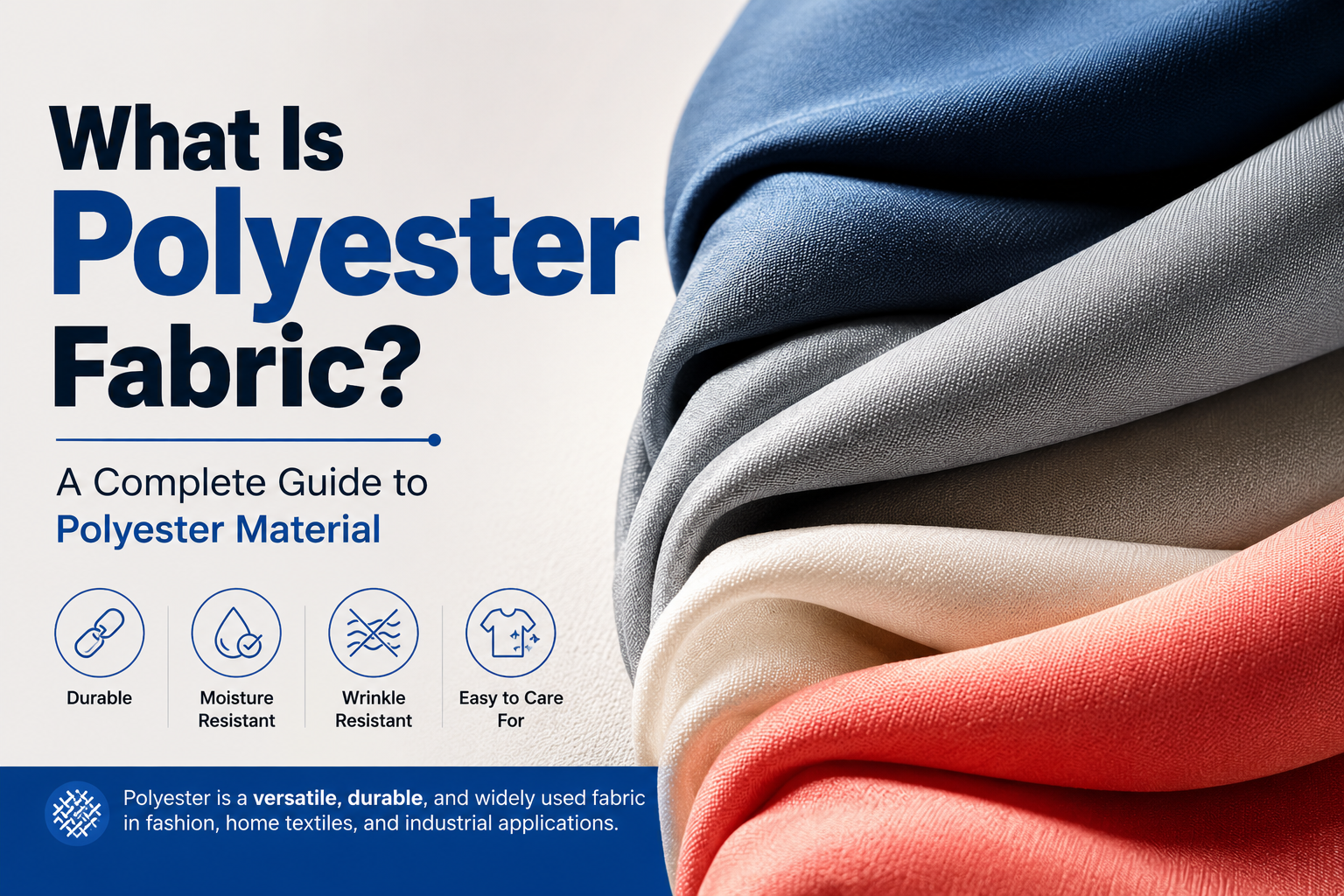
What Is Polyester Fabric? A Complete Guide to Polyester Material

Go check your closet right now. Seriously, go look. There’s a good chance half of what’s hanging in there has “polyester” printed somewhere on the tag. Your gym leggings, that rain jacket you grabbed last winter, probably your bedsheets too. It’s everywhere, and yet if someone stopped you on the street and asked what polyester fabric actually is, you’d probably just say “the synthetic one” and leave it at that.
Fair enough — that’s about where most people’s knowledge stops. So let’s actually dig into it properly. What is polyester, how does polyester fabric get made in the first place, is it actually good to wear or is that reputation deserved, and does the price you’re seeing online make any sense? Stick with this one, and you’ll walk away knowing more about polyester fabric than most people who’ve worn it their whole lives.
So, What Is Polyester Fabric Exactly?
Here’s the plain answer: polyester fabric is a man-made textile made from a plastic called polyethylene terephthalate — PET, for short. Yes, the same PET that’s in your water bottle. Not a weird coincidence either; polyester fiber and plastic bottles are chemically related, which is exactly why recycled polyester (literally made from old bottles) has become such a big deal in fashion over the last decade or so.
Unlike cotton, which grows on a plant, or wool, which comes off a sheep, polyester is entirely synthetic, built from scratch in a lab and factory process. It starts as a liquid polymer, gets pushed through tiny holes to form thin fibers, gets spun into yarn, and then woven or knitted into the polyester cloth you actually see and touch. Every step is engineered, which is honestly the whole reason it behaves so differently from natural fabrics.
And if you’re wondering what polyester is used for beyond just clothes — pretty much everything. Carpets, curtains, sofa fabric, industrial rope, conveyor belts, insulation. Polyester material shows up in way more places than people realize.
How Polyester Fabric Actually Gets Made
Short version, no chemistry degree required. It starts by reacting ethylene glycol with terephthalic acid, which produces a molten plastic — that’s your PET. This gets either cooled into small plastic chips or spun straight away while still hot.
That molten polyester gets forced through something called a spinneret basically a showerhead with incredibly fine holes which pulls out long continuous fibers. Those fibers cool down, harden, get stretched to build strength, and then either get cut into short pieces (similar to how cotton fiber looks) or kept long, depending on what kind of polyester fabric is being produced.
From there it’s spun into yarn, woven or knitted into finished fabric, and then dyed, printed, cut, and sewn into whatever it’s becoming next: a jacket lining, a full sports kit, whatever the order calls for.
Not All Polyester Fabric Is the Same — Here Are the Main Types
This is where a lot of the confusion comes from, honestly. “Polyester” gets used like it’s one single thing, but there are real differences:
PET Polyester: the standard type, used in the huge majority of clothing and general textiles.
PCDT Polyester: a slightly different chemical makeup that gives you a more elastic, textured fabric, often found in home furnishings and heavier-use items.
Microfiber Polyester: ultra-fine fibers, tightly woven, producing something soft and almost silk-like, plus water resistance. You’ll see this a lot in activewear and outdoor gear.
Polyester Blends: mixed with cotton, spandex, or other fibers to combine strengths. A poly-cotton blend, for instance, keeps polyester’s durability but borrows some of cotton’s breathability.
Recycled Polyester (rPET): made from recycled plastic bottles instead of new petroleum. Performs almost identically to regular polyester, with a much smaller environmental footprint.
Each type behaves a little differently, which is exactly why “it’s polyester” doesn’t actually tell you much on its own; the specific type and blend matter a lot more than the label suggests.
What Polyester Material Is Actually Good At
If you’re trying to figure out whether polyester fabric fits your needs, here’s what genuinely matters:
It’s tough. Polyester fiber resists stretching, shrinking, and general wear far better than most natural fibers. That’s exactly why it’s the default choice for sportswear that needs to survive repeated washing and hard movement. Check out our own custom sportswear categories if you want to see how that plays out in real products.
It resists wrinkles. Polyester cloth holds its shape and doesn’t crease easily, which is a big reason it’s popular for travel clothes and anything low-maintenance.
It wicks moisture instead of soaking it up. Cotton absorbs sweat and water. Polyester pushes it out to the surface where it evaporates faster — which is exactly why so much performance sportswear leans on polyester or polyester blends.
It dries fast. Following straight on from that, polyester dries noticeably quicker than cotton, another reason it dominates the activewear space.
It holds colour really well. Dyes and prints stay vibrant wash after wash, which matters a lot for custom team uniforms with bold logos and colours, something we deal with constantly when we manufacture custom sportswear for European brands.
It doesn’t breathe as well as natural fibers. This is the real downside, and it’s worth being upfront about. Good manufacturers offset this with specific weaves, mesh panels, or blends built into performance clothing.
Is Polyester Fabric Good or Bad? Let’s Just Answer It Honestly
This gets searched constantly, and the honest answer is: it depends what you’re using it for. That’s not a cop-out — it’s genuinely the accurate answer.
Where polyester is a solid choice:
- Sportswear and activewear, where durability and moisture-wicking matter more than breathability
- Rain and outdoor gear, where water resistance is the whole point
- Anything that gets washed constantly and needs to keep its shape
- Budget-conscious clothing that still needs to last
Where it’s not the best fit:
- Everyday summer wear in very hot, humid places, where breathability wins
- Sensitive skin situations, where some people just prefer natural fibers over long wear
- Anything where environmental impact is the top priority and a better alternative exists
The whole “polyester is bad” reputation mostly traces back to cheap, poorly made polyester clothes from decades ago you know the ones, shiny and sweaty. Modern polyester fabric, especially performance blends and recycled versions, is a genuinely different product from what “bad polyester” used to mean.
Does the Season Actually Matter for Polyester Fabric?
Yes, and it’s worth understanding if you’re buying or manufacturing seasonal clothing. Polyester on its own doesn’t breathe brilliantly, so a heavy, tightly-woven 100% polyester fabric can feel warm and a bit stuffy in peak summer heat. That said, manufacturers work around this all the time — lightweight, mesh, moisture-wicking polyester fabrics are specifically built for hot-weather sportswear, which is why you’ll find polyester in summer running kits just as often as in winter jackets.
For colder months, polyester fleece and heavier blends genuinely shine in warmth, dry fast if it gets wet, and holds its shape through an entire winter far better than a lot of natural alternatives.
Bottom line: polyester fabric works across every season, but the specific weave, weight, and blend matter a lot more than just the word “polyester” printed on the tag.
A Quick History Lesson on How Polyester Got So Popular
Polyester’s been around longer than most people think. British chemists first developed the fiber in the early 1940s, and it made its way to the US not long after, where DuPont started producing it commercially. By the 1970s it had exploded in popularity, for the same reasons it’s still popular today: cheap, durable, low-maintenance compared to what was around before it.
Early polyester had a real reputation problem, though — thin, shiny, didn’t breathe at all, which is exactly where the “cheap and uncomfortable” stereotype comes from. Decades of better weaving and fiber engineering have completely changed what polyester fabric can actually be. The technical polyester used in modern sportswear has almost nothing in common, performance-wise, with the stuff from the 1970s.
Polyester vs Cotton — Which One Actually Wins?
This comes up all the time, and honestly, neither one wins outright — they’re just built for different jobs.
Cotton breathes better, feels softer against skin for most people, and is natural and biodegradable. The trade-off: it absorbs moisture, dries slowly, wrinkles fast, and tends to lose shape or shrink over repeated washes.
Polyester fabric holds its shape wash after wash, dries quickly, resists wrinkling, and pushes moisture away rather than soaking it up. The trade-off there is reduced breathability, and for some people, it just feels less “natural” against the skin.
That’s exactly why so much modern clothing sportswear especially, uses a poly-cotton or poly-blend rather than picking one extreme. You get polyester’s shape retention and durability with some of cotton’s breathability and softness thrown in.
For actual performance sportswear, pure polyester or a poly-spandex blend usually wins out, simply because moisture control and durability under heavy movement matter more than softness.
Keeping Polyester Fabric Looking Good for Longer
One underrated thing about polyester material — it’s genuinely easy to look after, but a few basics still matter:
- Wash cold or lukewarm. High heat weakens polyester fibers over time and can even melt certain finishes.
- Keep the dryer on low or medium. Protects both the fabric and any printed designs or embroidery on it.
- Skip fabric softener on performance polyester. It clogs the fibers responsible for moisture-wicking — the exact thing you bought the fabric for.
- Turn printed garments inside out before washing. Protects sublimation prints, embroidery, and logos from getting worn down by friction.
Get this right, and polyester fabric genuinely lasts, which is exactly why it’s the standard pick for team uniforms and activewear that need to survive an entire season of hard use. A club or brand ordering a full season’s worth of kits genuinely notices the difference between fabric that holds up and fabric that starts pilling or fading after a handful of washes, so this isn’t just a laundry tip; it’s part of what actually justifies choosing polyester over a cheaper alternative in the first place.
Is Polyester Actually Environmentally Friendly?
Worth being straight about this instead of dodging it. Standard, virgin polyester comes from petroleum and isn’t biodegradable, so it does carry a real environmental cost, both in production and at the end of life.
That said, the industry’s shifted a lot toward recycled polyester (rPET), made from post-consumer plastic bottles and other PET waste instead of new petroleum. Recycled polyester fabric performs almost identically to virgin polyester — same durability, same moisture-wicking — while using a lot less energy to produce and giving existing plastic waste a second life instead of sending it to landfill.
If sustainability matters to you or your brand, asking specifically whether a garment uses recycled versus virgin polyester is a much more useful question than avoiding polyester altogether — a well-made recycled polyester garment can genuinely outlast several cheaper cotton alternatives.
Polyester Fabric in Pakistan — Where a Lot of the World’s Supply Actually Comes From
If you’ve searched for polyester fabric in Pakistan, here’s the useful context: Pakistan is one of the biggest textile-producing countries on the planet, and polyester (along with cotton and poly-cotton blends) makes up a massive share of that output. Faisalabad handles a lot of the raw fabric weaving and processing, while Sialkot — where we’re based at Warrco Industry — has built its own specialisation turning that fabric into finished sportswear and activewear for brands overseas. If you’re curious why this specific city ended up so dominant in the space, we’ve written more about why Sialkot is a global hub for sportswear manufacturing.
This matters if you’re sourcing sportswear internationally. A manufacturer based where polyester fabric is actually produced at scale has more direct access to fabric mills, better pricing on bulk polyester material, and tighter control over what actually goes into your finished garment — compared to a manufacturer that has to import the fabric from somewhere else first.
What Actually Drives Polyester Fabric Price?
If you’ve searched for polyester fabric price or polyester fabric price in Pakistan, you’ve probably noticed the numbers all over the place — and that’s because it genuinely depends on a few real factors, not one fixed rate:
- GSM (fabric weight): heavier polyester costs more per metre than lightweight versions
- Weave and finish: microfiber and technical performance polyester cost more to produce than basic woven polyester
- Blend composition: poly-cotton or poly-spandex is priced differently than 100% polyester
- Order volume: bulk sourcing for manufacturing is priced very differently than small retail quantities
- Recycled vs virgin polyester: rPET can sometimes cost a touch more due to the recycling process, despite using waste material
If you’re actually manufacturing sportswear rather than just buying fabric off a roll, it’s worth asking your manufacturer for a landed cost per finished garment instead of pricing fabric on its own — that number reflects what you’re really paying once cutting, sewing, and finishing get added in. Our How to Order page breaks down exactly how that quoting process works.
Where You’ll Actually Find Polyester Clothes Day to Day
Polyester clothes show up in more of your wardrobe than you’d probably guess:
- Sports jerseys, tracksuits, and team uniforms
- Activewear — leggings, sports bras, compression tops
- Polyester fabric jackets, both casual and technical outdoor styles
- Workwear and school uniforms, thanks to durability and easy care
- Formal wear linings and some dress fabrics, where satin-finish polyester gives a silk-like look for a lot less money
A polyester fabric jacket specifically benefits from the fiber’s natural water resistance and quick-drying properties, which is exactly why so many rain shells and lightweight outdoor jackets are made from polyester or a polyester-nylon blend rather than cotton.
Even accessories lean on it — bags, caps, and team gear bags are frequently made from a heavier woven polyester specifically because it holds up to daily wear and tear far better than lighter natural fabrics would in the same role.
How We Actually Use Polyester Fabric at Warrco Industry
Polyester and polyester blends make up a big chunk of what we work with at Warrco Industry, simply because it’s the right material for the job. Sports uniforms, activewear, technical fitness wear — all of it benefits from what polyester does well: pulling moisture away from the body, holding colour through constant washing, and surviving the kind of stretching and movement that natural fibers struggle with.
When a brand comes to us to manufacture custom sportswear, part of our job is helping pick the right polyester weight, weave, and blend for that specific product. A lightweight microfiber polyester for a summer training kit is a completely different choice from a heavier polyester-spandex blend for compression gear, even though both get called “polyester” on a spec sheet.
If you want to see exactly how that process runs from your first idea to a finished, sample-approved product, check out how ordering actually works with us — and if you’re weighing us up against other manufacturers, our guide on shipping and delivery to Europe covers exactly how DDP shipping works for EU and German buyers.
Frequently Asked Questions
What are polyester fabric clothes actually good for?
Sportswear, activewear, outdoor gear, and anything that gets washed a lot and needs to keep its shape and colour. The moisture-wicking and quick-drying properties make it a strong pick for anything involving sweat or movement.
Does polyester fabric work well in every season?
It can, but the type matters. Lightweight, breathable, mesh-panelled polyester works great in summer sportswear, while heavier fleece and blends are excellent for colder weather. A single heavy, tightly woven polyester, on the other hand, can feel warm in peak summer heat.
What is polyester fabric called in Urdu?
In Urdu, it’s generally just called “پالئیسٹر” — a direct transliteration of the English word, sometimes alongside the general term “مصنوعی کپڑا” (synthetic fabric), since polyester doesn’t really have an older traditional Urdu name of its own.
Is polyester fabric commonly available in Pakistan?
Yes, very much so. Pakistan is one of the world’s biggest textile producers, with major polyester and poly-cotton production around Faisalabad, and specialised sportswear manufacturing hubs like Sialkot turning that fabric into finished garments for export.
Is polyester fabric good or bad for you to wear?
Neither, really — it depends on the use case. For sportswear and performance clothing, its moisture-wicking and durability make it a genuinely good pick. For everyday wear in very hot, humid conditions, a more breathable natural fiber or a blend might feel more comfortable.
What determines polyester fabric price?
Fabric weight (GSM), weave type, blend composition, order volume, and whether it’s recycled or virgin polyester all play into it. There’s no single fixed rate — it varies a lot depending on these factors, whether you’re buying by the metre or sourcing for manufacturing.
Is polyester fabric good for making a jacket?
Yes, especially for lightweight outdoor and rain jackets. Its natural water resistance, quick-drying properties, and durability make it one of the most common jacket fabrics out there, often blended with nylon for extra strength.
How can I tell if something’s polyester or a polyester blend?
Check the label first — it’s legally required to list fabric composition. Beyond that, 100% polyester tends to have a slight synthetic sheen and barely wrinkles, while blends show characteristics of both fibers, like cotton’s softness with polyester’s durability.
Building a Sportswear Line and Need the Right Polyester Fabric?
At Warrco Industry, we manufacture custom OEM and private-label sportswear using polyester and technical polyester blends chosen specifically for performance and durability, not just whatever’s cheapest. If you’re putting together a sportswear or activewear collection and want to get the fabric choice right from day one, happy to walk you through your options.